14 September 2026
3D Printing for Montessori and Children's Play: Open-Ended Toys Made for Curious Hands
Explore how colourful, durable 3D-printed toys can support open-ended play, sensory activities, stacking and pretend kitchens, then find a local maker to create one.
The best toys do not tell children exactly what to do. A bowl can become a potion cauldron, a set of shapes can become a tower, and a fried egg can be breakfast for an imaginary café. That is the appeal of open-ended play: the child brings the story, rules and next idea.
3D printing is a particularly good fit for these playful objects. It makes small-run, colourful designs practical, and gives families access to thousands of ideas that may never appear on a conventional toy-store shelf. If you do not have a printer, a local maker can help turn the right design into a finished play set.
Why 3D printing works so well for open-ended toys
Bright colours invite play
Colour is part of the invitation. A stacker with clearly different shapes, a tray of pretend ingredients, or a set of matching cups is easier for a child to recognise, sort and turn into a game when the pieces are visually distinct.
3D printing makes it possible to choose colours for the individual pieces rather than accepting one off-the-shelf finish. A local maker can help you keep the palette simple for sorting activities, make a set that suits a favourite theme, or use colour to distinguish parts that belong together.
Thousands of designs, not one fixed toy aisle
Model libraries such as MakerWorld give parents and carers a huge starting point: pretend-play accessories, sorting games, sensory fidgets, small-world props, stackers, trays and organisers. You can begin with a ready-made model, then check whether its scale, pieces and print notes make sense for your child and intended activity.
That variety makes it easier to choose an object that leaves room for imagination. A few loose pieces can be a shop, a restaurant, a science lab or a treasure hunt on different days.
Made for repeat handling
A well-designed print in an appropriate material can stand up to regular handling much better than a fragile craft project. For everyday indoor play, ask a maker about a sturdy design with rounded edges, thick enough walls and a material suited to the job. The model, print settings and intended age all matter, so “3D printed” alone is not a durability guarantee.
For young children, avoid brittle details and treat any toy with small detachable parts, moving joints or sharp edges as something to assess carefully before use.
Ideas for Montessori-style and imaginative play
Sensory play: mix, pour and invent
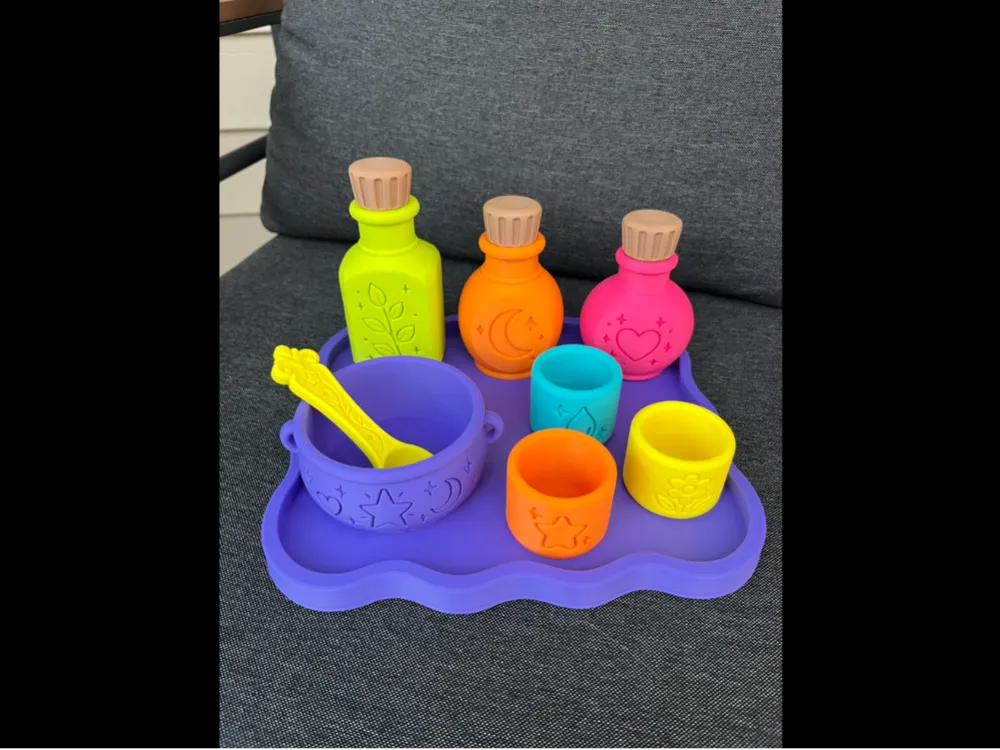
A pretend potion set can give children a simple prompt without deciding the story for them. Cups, trays, tokens and ingredients can become a café, garden experiment or magical workshop. The Sprout Potion Play Set is one example of a themed set that can support this kind of role play.
Pair a small printed set with safe, age-appropriate loose parts you already own, then let the child decide what the “potion” does. Keep liquids, small items and any non-toy materials separate unless you have checked they are appropriate for the child’s age and the activity is supervised.
Stacking puzzles: shape, sequence and balance
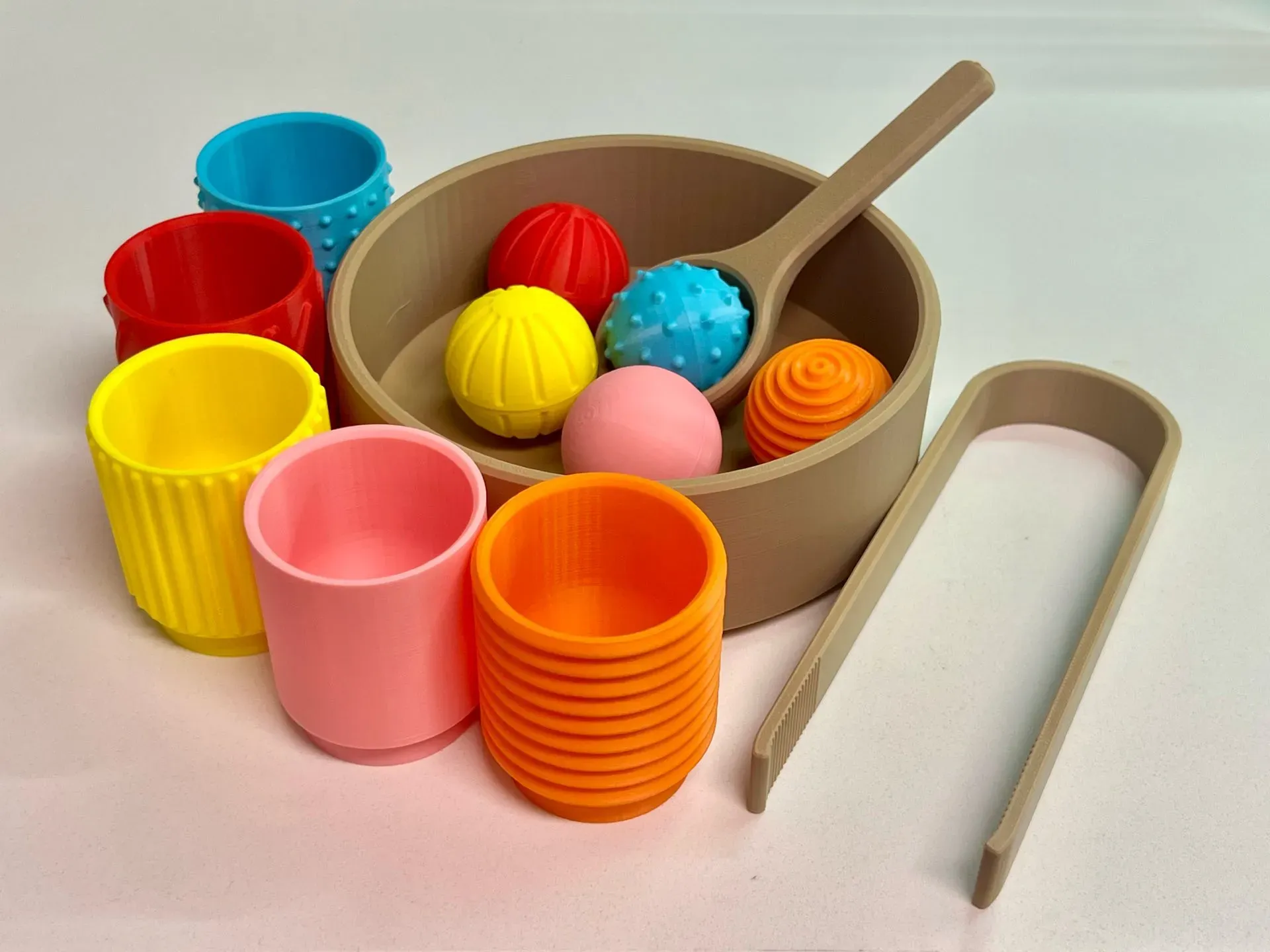
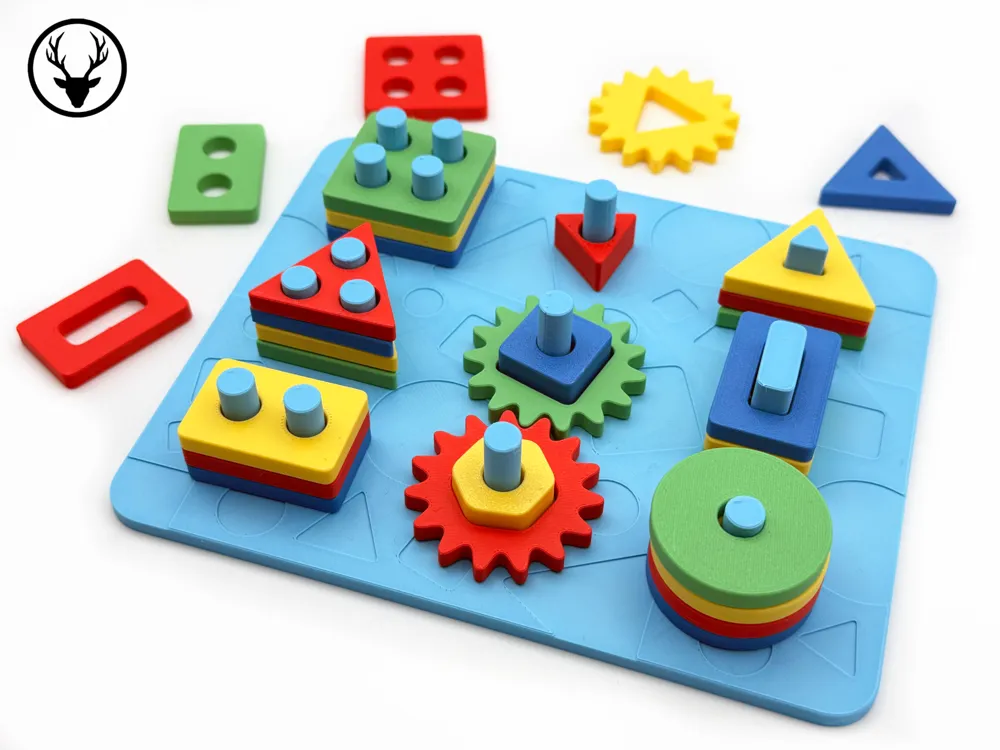
Stacking gives children a chance to explore shape, size, order and balance through their hands. The Kids Shape Stacker Puzzle combines stacking shapes with an interactive board, offering several ways to sort and arrange the pieces.
Use a stacker as an invitation rather than a test. A child may match colours, build the tallest tower, group shapes, make patterns or create a scene around the pieces. The “right” use is less important than giving them something safe and satisfying to explore.
Play kitchen: food with a little personality
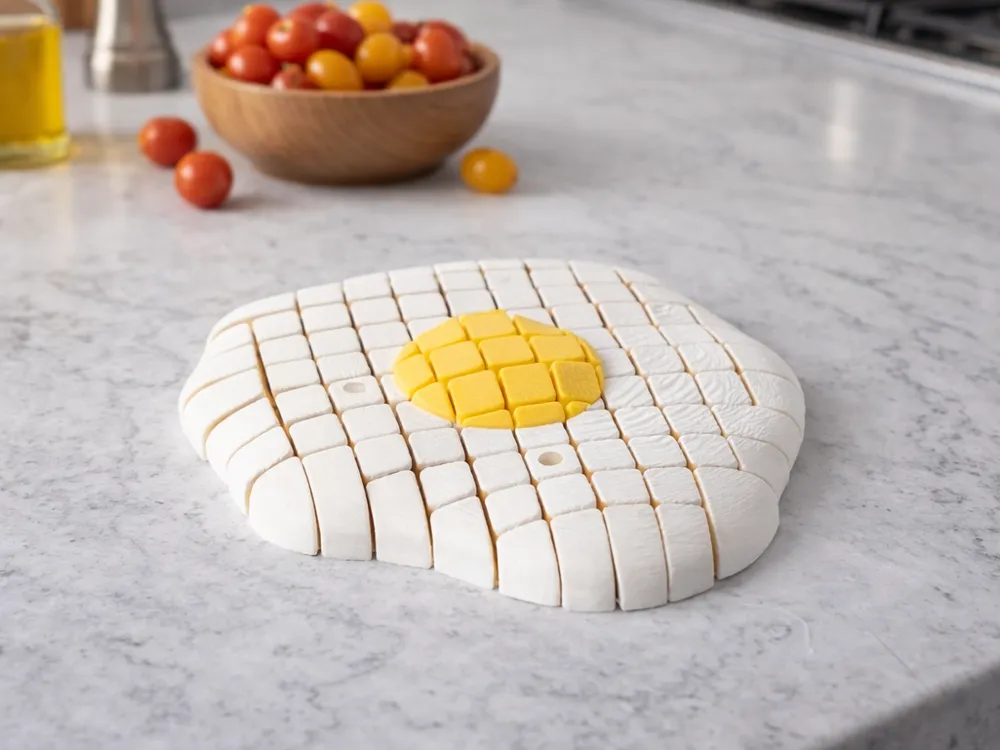
Pretend food is a classic way to begin open-ended play. A playful accessory such as the Articulated Fried Egg Fidget Toy could become breakfast in a play kitchen, an order in a pretend café or a tactile prop in a made-up story.
For kitchen play, a maker may also be able to help with a coordinated set of food shapes, utensils, trays or labels. Check individual model notes before commissioning a print, particularly for articulated designs: moving segments and small components can make a model unsuitable for younger children.
Briefing a local maker
When you find a design you like, send the maker the direct model link along with a short brief:
- The child’s age range and how the toy will be used.
- The number of sets or pieces you need.
- Preferred colours and whether colour matching matters.
- Whether you need a larger size, thicker parts or a simplified set.
- Any small-part, edge or supervision concerns you want reviewed.
- When you need it by.
A maker can advise on whether the design is printable as supplied, whether a stronger material or adjusted size would be sensible, and what finishing is included. Read the designer’s licence too: a downloadable model is not automatically licensed for commercial resale or modification.
A quick safety check before play
3D-printed toys are not automatically safety-certified. Before handing a printed item to a child, inspect it for loose layers, sharp edges, cracks, tiny parts and pinch points. Match the item to the child’s age and abilities, supervise where appropriate, and follow any age guidance from the designer or maker.
If the toy will be chewed, used with food or regularly exposed to water, ask a professional provider about the limitations of the design and material rather than assuming a typical printed plastic is suitable.
Find a maker for a custom play set
A simple idea can become a play set that feels personal: colours your child loves, a set sized for their hands, or a collection built around the way they already play. Start with the 3D printing services directory to find a local maker, then send through the design link and a clear brief.
The result does not need to be a complicated gadget. Often, a few durable, colourful pieces with space for a child’s imagination are more than enough.